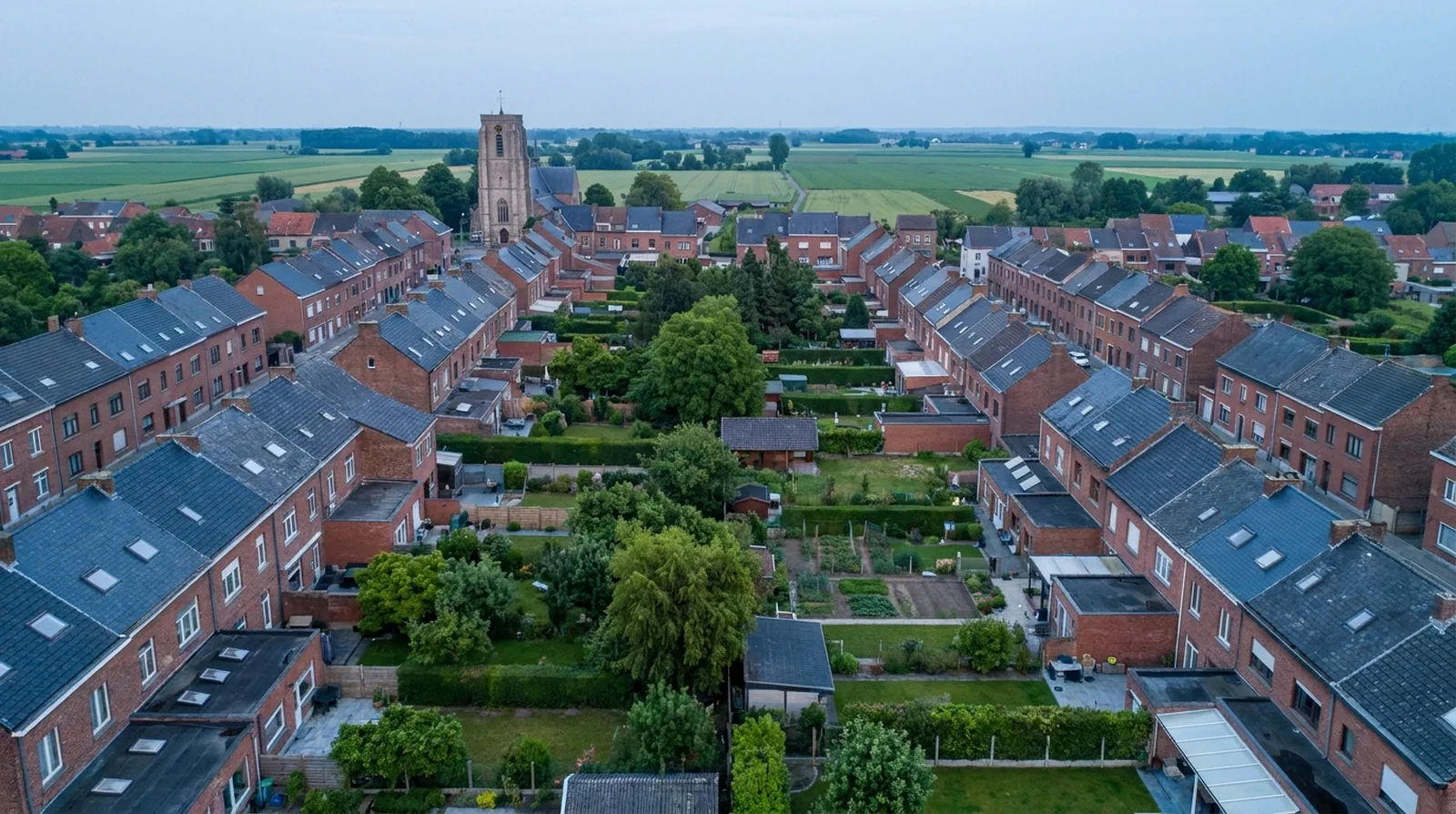
In Meise, Dilbeek and Overijse, houses sit among old trees and the north slope never dries out completely. Moss is part of the landscape there. The question is not how to get rid of it for good — that is impossible — but when it turns from a cosmetic problem into a technical one.
Why always on the north side
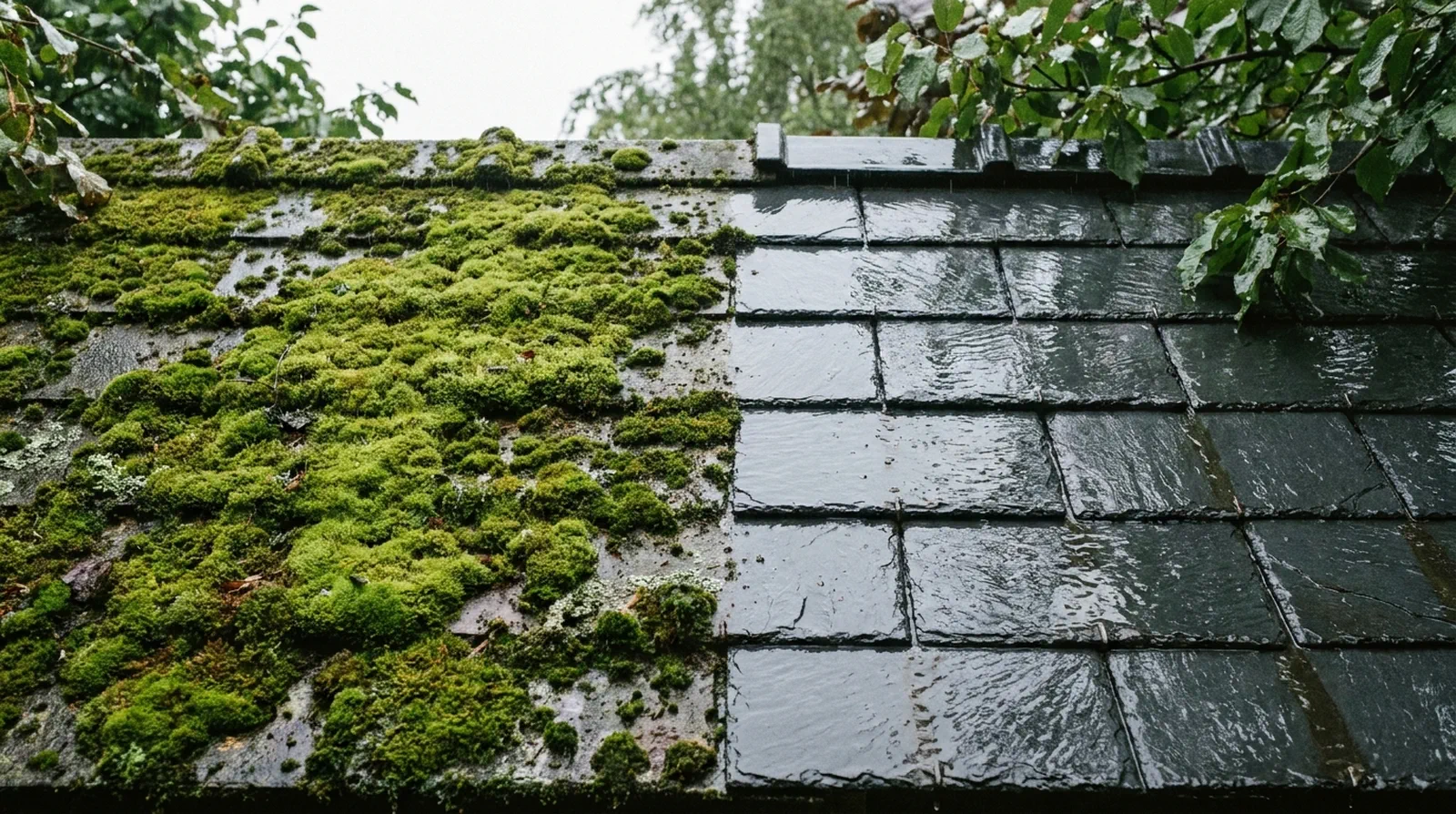
Moss needs two things: damp and little light. The north slope gets almost no direct sun: it stays wet for hours longer than the south slope after a shower. Add overhanging branches bringing leaves and shade, and the conditions are ideal.
Porous materials — concrete tiles, old clay tiles, natural slates with a rough surface — hold on to that moisture as well. Smooth glazed tiles are noticeably less prone to it. So it is not a question of poor maintenance, but of orientation and material.
When it actually does harm
Three situations turn moss into a technical problem. First: moss that blocks the gutter. Once it comes loose it washes down and chokes the outlet; the water then goes over the edge, straight onto the facade, and creates damp stains there that cost far more than the cleaning.
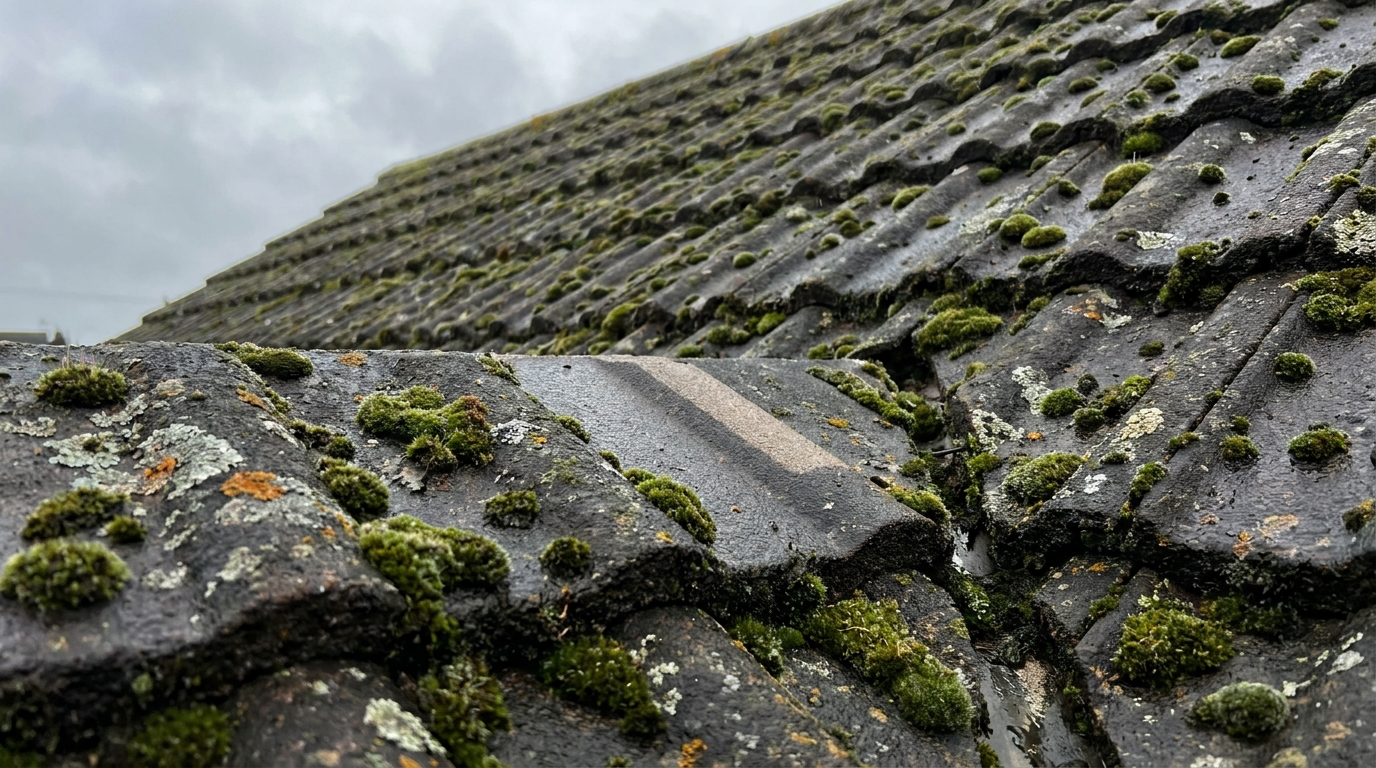
Next: moss growing in the overlap between the tiles. There it holds the water and draws it back up, until it passes under the tile instead of over it. On a roof with no underlay — and there are many of those in older housing stock — that water ends up straight in the loft.
Lastly: frost. The moisture that the moss holds against the tile expands in freezing weather and blows off the surface layer. On a concrete tile that is already sanding away, that speeds up the ageing considerably.
Why we rarely use high pressure
A pressure washer is impressive and it is quick. On a sound, smooth tile it is possible, working from the top downwards and at the right distance. On a deteriorated concrete tile or an old clay tile it does exactly what frost does: it takes off the last protective layer and leaves a surface more porous than before.
The result only shows two winters later: the moss comes back faster than before and the tile breaks more easily. So we assess the condition of the covering first, and only then the method. At the slightest doubt we clean by hand or at low pressure. It takes longer and it is less spectacular, but the roof stays in one piece.
What any good clean includes
Clearing out and flushing the gutters and the downpipes, before the job is finished. Everything that comes down off the roof ends up there; skipping that step only moves the problem along to the drainage.
A check of the ridge tiles and the verges, because that is where a clean loosens something first. And an honest assessment afterwards: when we find that the tiles are at the end of their life, we say so. Cleaning a worn-out roof is money that would be better spent on replacing it.
This service in your municipality